The early 1980s were a tough time for Black musicians as R&B/Funk bands were caught up in the anti-disco avalanche that killed the genre in the late 1970s.
Ever the innovators, Black musicians and producers embraced modern technology, which took away from bands and session players of various instruments, but there was something primitive yet futuristic about the sounds coming from drum machines such as the Roland TR-808, the LinnDrum L1 and synthesizers from Roland, ARP, Korg and Moog as well as emerging keyboard giants Casio and Yamaha.
Among those innovative and creative producers were the Fantastic Aleems, twin brothers TaharQa and Tunde Ra Aleem who had long standing ties to the music scene in Harlem, including serving as hosts and backing performers for a rising journeyman guitarist named Jimi Hendrix before he moved to Europe. After Hendrix’s untimely death in the fall of 1970, the Aleems spent much of the 70s recording their own music and producing for other artists, but as the decade came to a close, they were wary of the music industry’s structure and with a 1500-dollar loan from their father, started NIA Records in 1979.
By 1983, there was a serious Afrofuturism movement going on in Black music, sparked by a new genre of music called rap/hip-hop. Records like Planet Rock by Afrikaa Bambaata and the Soul Sonic Force and Jam on Revenge (The Wikki Wikki Song) by Nucleus were taking over dance floors and parties all over New York, transporting listeners to a galaxy far, far away where the groove was neverending.
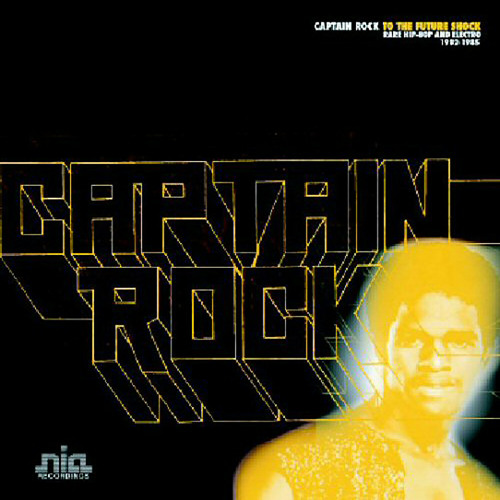
And the Aleems had their own outer space jam called “The return of Captain Rock,” which they produced and co-wrote with the fledgling duo of Dr. Jeckyll and Mr. Hyde, one half of which was a young MC who would change the culture forever later on as an executive, tastemaker, producer and label head. His name was Andre Harrell.
Captain Rock himself was D.J. Ronnie Green, a DJ at the famous Harlem World club and one of early hip-hop’s seminal figures.
Hearing the pulsating drum track, the punchy/glistening synth combo for the first time 40 years ago had to be a trip in all the best ways and once the extended version started circulating, breakdancers had another soundtrack for their best moves. Over this heart-pounding groove, Captain Rock brags about his ability to get anyone on the dance floor to move and groove, shake and levitate beyond Earth’s dimensions.
“The return of Captain Rock” is a song in a long line of early 1980s bops that shifted the sound of R&B/Soul/Funk to a more synth-favored sound, one that would eventually lead to New Jack Swing at the end of the decade. You can hear the roots of hip-hop and soul’s combination throughout the record even though Captain Rock does no actual harmonizing or singing. It remains one of the electro/boogie era’s biggest cuts and for good reason. Listen for yourself and try not to end up on Mars.